
5 minute read
10 minute read
Ever wondered what life in the Army would be like, but don’t want a full-time Army career?
The Army Reserve is the part-time branch of the British Army that gives you the chance to serve while carrying on with your everyday life. That means you could have a civilian career, be studying at university, or simply want a new challenge alongside your normal routine. It’s flexible and designed to fit around your day-to-day life.
So, let’s break down what being a Reservist can really mean for you.

The British Army Reserve is made up of people who serve part-time. You train with a local unit and take part in Army activities while still keeping your day job or other commitments.
Training happens on evenings and weekends at a Reserve centre near you, and you’ll sometimes spend a weekend away to take part in more intensive training.
No two Reservists are the same. You could be a student, an engineer, a nurse, a teacher, a tradesperson, or someone just starting out in their career.
Everyone may have their own story and their own reasons for joining, but you’ll all share the same ambition and passion to make the Army part of your life.
Yes. While the Army Reserve is part-time, it still comes with a duty and commitment.
Depending on your your role in the Reserve, you’ll need to commit to at least 19 or 27 days of training each year. You may also choose to do more than that if it works with your schedule.
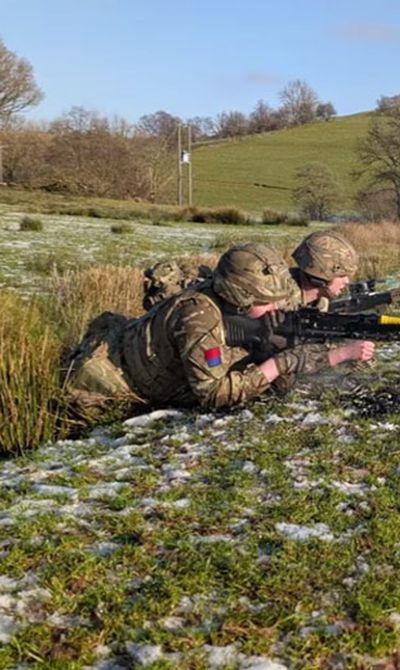
Most of your training will be done through 'drill nights.' These take place on evenings and weekend with your local unit and typically focus on physical fitness and military skills. Throughout the year, you may also take part in training camps, exercises, or head out on adventurous training.
It’s better to think about your commitment over the course of the year, rather than days or weeks. You may find that you’ve done 8 drill nights in one month, and 1 night the next.
The important thing is that you know what’s being asked of you and think about how it fits with your own life.
You can be a Reservist and still be a student, a parent, a football fan, a dog owner, a musician, a graduate or someone building a career.
Your Reserve training is spread across the year. You could attend a drill night during the week, take part in a weekend exercise, and then join your unit for a longer training period later in the year.
Training is designed to develop your skills as you go. You’ll work on maintaining your physical fitness and enhancing your military skills, and you can plan your training around your other commitments.
The Army has fitness standards for all its roles, but you don’t need to be a superhero before you start training. Think of it as something you work on.
Your Reserve training will give you a chance to become stronger, fitter and more confident over time.
Yes, you can be an Army Reservist while working full-time. And it’s one of the biggest reasons why people choose the Reserve.
Your civilian job doesn’t just disappear when you put on your Army boots. You may find that your civilian career and your Army career actually work well together. Being in the Army Reserve can help you build confidence, teamwork and leadership skills, while your civilian role may bring practical skills to your military role.
You could even think of the Reserve as a second career rather than a second job. It gives you a chance to take on new challenges, new ways of working, and to try things that you may not get to do during your working week.
Yes, the Army Reserve is built to be flexible. If you’re in university, you can study during the week and train with your Reserve unit around your timetable.
Your university life and Army life can become two parts of the same experience. You may even find that Army training gives you a welcome change from lectures, essays and revision.
It can also help you meet people outside your usual student circle as you’ll be training with people from very different jobs, and of all ages and backgrounds.
That variety is one of the things that makes Reserve life interesting.

The Regular Army is a full-time military career. You live and work as a soldier as your main job.
The Army Reserve is designed to fit around your civilian life. You train and serve part-time while keeping your day job or continuing your studies.
And if you were thinking, 'Well, what’s the Territorial Army, then?' That’s an older name for what is now known as the Army Reserve.
If you decide later that you want a full-time military career, there are pathways available to transfer from the Army Reserve to the Regular Army.
As an Army Reservist, you may be asked to go on operations both in the UK and abroad. It’s usually voluntary and you’ll need to get approved leave from your full-time employer, but the government can make this request compulsory if needed.
There are plenty of reasons people decide to join the Army Reserve.
 You can gain new skills, meet new people, and challenge yourself.
Maybe your 9-to-5 involves sitting at a desk. At the weekend, you could be outdoors, working with your team and learning practical skills.
And, yes, you’ll get paid for every day that you train.
For those who crave adventure and sports, you’ll find that staying active and curious is a way of life in the British Army. There are over 100 sports to choose from, plus tons of opportunity for adventurous training. Think kayaking in the rapids of Canada or sky diving in Spain.
To join as a Reservist, you’ll need to be at least 18 years old on the day that you start training.
Upper age limits are a little different for Reserve Soldiers and Reserve Officers. The upper age limit for Reserve Soldiers is 48 years old on the day you start training. For Reserve Officers, the upper age limit is 49 years old on the day you start training.
It’s a good idea to review the application process and check your eligibility, so you know what to expect ahead of time.
If you decide you want to explore the Army Reserve further, you can either start an application now or visit your local Reserve Centre. Most units host open evenings and can arrange a visit for you.
Being a Reservist is not about becoming a completely different person. You can be a Reservist and still be a student, a parent, a football fan, a dog owner, a musician, a graduate or someone building a career.
If you’re thinking about part-time Army vs full-time, there’s no right or wrong answer. The best solution may be to think about which way of serving fits your life now and the life you want to build.
With the Army Reserve, you don’t have to press pause. You can bring the life you already have with you.
5 minute read
3 minute watch