- .Regular Army
- .Inclusion & values
- .Religion

Religion or belief in the British Army
Serving your country and keeping your faith. You don't have to choose.
At a glance
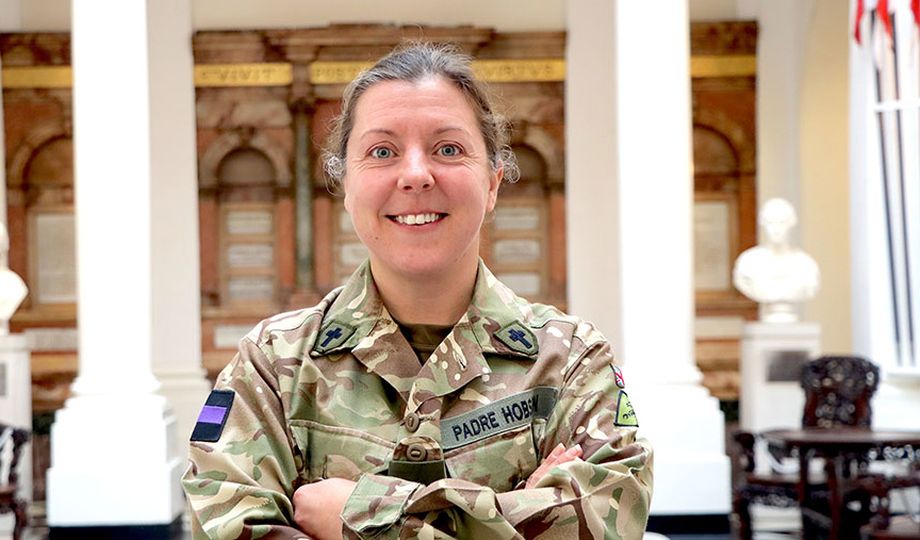
You don't have to give up your religion or faith to have a career in the Army. The British Army supports soldiers of every religion and belief. Army Padres are Christian ministers, but they support soldiers of any faith - offering guidance and help to soldiers at home and overseas.
There are Army Forces Chaplains from multiple faiths as well as dedicated prayer facilities, faith-specific dietary options, and support for religious dress and appearance requirements.
How the Army supports your faith


Uniform & your faith
You can usually wear traditional religious items with your Army uniform. When you're wearing equipment such as helmets or protective kit, you may need to make some adjustments for safety reasons.



Uniform & your faith
You can usually wear traditional religious items with your Army uniform. When you're wearing equipment such as helmets or protective kit, you may need to make some adjustments for safety reasons.


There are currently over 650 Buddhist soldiers in the British Army with an active community.
The Defence Buddhist Network is open to all service members, connecting the wider Buddhist community across the UK Armed Forces. It's your go-to for keeping up with annual celebrations, like Vesak, and other community events.
You can wear Protection and Blessing Strings and Mala with your Army uniform. During certain types of operations, you may not be able to wear traditional attire. This is typically because you'll be wearing specialist kit or when health and safety must be prioritised.
When it comes to dining, vegetarian options are available in camp, on operations, and on exercise across the British Army.
The Christian community is the largest faith group in the British Army, welcoming several denominations.
If attending service is a regular part of your life, you can join weekly Christian services every Sunday at Garrison Churches across the UK. They're non-denominational and open to all. On exercises and operations, 'Padres' are also on-hand to hold services in the field.
There are also multiple Christian faith-led groups open to members of both the British Army and the wider UK Armed Forces.
What are Padres?
Padres are members of the Royal Army Chaplains’ Department (RAChD) and can give communion to serving personnel while deployed. They have full access to denominational churches and are able to minister to all.
The Hindu community in the British Army is very active with around 1,000 members.
You can wear Raksha Bandhan, and the Tilak can be worn on the forehead, as part of your uniform. During certain types of operations, you may not be able to wear traditional attire. This is typically because you'll be wearing specialist kit or when health and safety must be prioritised.
When it comes to dining, vegetarian options are available in camp, on operations, and on exercise across the British Army.
The Defence Hindu Network is open to all service members, connecting the wider Hindu community across the UK Armed Forces. It's the best way to stay up-to-date on community events and annual celebrations, like Divali.
If you identify as non-religious, you can still find pastoral support if and when you need it. More than 30% of full-time UK service members identify as non-religious, so there's a large community to lean on.
Humanist and Non-Religious in Defence (HAND) is open to all members of the UK Armed Forces. The group provides volunteer pastoral and celebrant support, bringing together service personnel, veterans, and their families.
Becoming a Non-religious Chaplain
If non-religious pastoral care is something you'd like to provide to others in the Army as part of our Chaplaincy, you'll need to first get an endorsement from the Non-religious Pastoral Support Network before applying as a Regular or Reserve Chaplain.
Jewish soldiers serve openly within the British Army.
The Jewish Military Association and HM Armed Forces Jewish Community (HMAFJC) bring together service personnel from across the Armed Forces for annual celebrations and community events.
If you're a male soldier, you can wear a dark, plain-pattern yarmulke when not wearing headdress. In some situations, you may need to remove it for safety or operational reasons.
When it comes to dining, kosher meals are available on request in all barracks. Vegetarian options are also readily available. On operations and exercises, special ration packs can be arranged in advance.
The Muslim community in the British Army currently has over 450 serving personnel. The Armed Forces Muslim Association (AFMA) brings members of the community together for events and annual celebrations, like Eid.
As a male Muslim soldier, you can wear a full uncut beard in the Islamic tradition, so long as operational effectiveness and safety is not at risk
As a female Muslim soldier, you can wear trousers and shirts with the sleeves rolled down and you can cover your arms and legs in all orders of dress. This includes cravats for open collars.
A hijab may be also be worn all with orders of dress, so long as operational effectiveness and safety is not at risk.
When it comes to dining, halal options are available in camp, on operations, and on exercise across the British Army.
The Rastafarian community in the British Army currently has around 100 serving members.
The Defence Rastafari Network brings together Rastafarian service personnel from across the UK Armed Forces for community events, support, and celebrations.
You can wear a full beard and locs, which do not need to be altered or cut, so long as operational effectiveness and safety is not at risk. Because you'll be wearing all forms of Army headdress, your locs should be uniform and easy to wear into buns, twists, and other styles.
When it comes to dining, vegetarian options are available in camp, on operations, and on exercise across the British Army. Vegan options are also available on request.
The Sikh community in the British Army currently has around 150 serving members.
The Defence Sikh Network is open to all service members, connecting the wider Sikh community across the UK Armed Forces. It's the best way to stay up-to-date on community events and annual celebrations.
You can wear a turban with most orders of dress and an uncut beard, so long as operational effectiveness and safety is not at risk. In moments when a turban can't be worn, a Patka can be worn instead.
You'll also be able to wear Kanga, Kara, Kacha, and Kirpans.
There are currently more than 50 religions represented in the British Army, so you're never alone.
When you join, you'll be asked about your religion or other belief system so that we can get to know you better and understand how the Army continues to grow.
Whether you identify as religious or non-religious/humanist, it's important to know that you'll be judged only by your actions.
All faiths and religions are welcome, so long as it is not illegal under civil law and is compatible with the Values and Standards of the Army.
If you'd like to know more about religion in the British Army and how your faith can become an important part of your Army life, pop in to your nearest Army Careers Centre or give us a call.

Still curious?
Ask real soldiers about balancing career and religion while serving in the British Army.
Ask a soldierWhat soldiers say
Thinking of joining?
Find out more about the application process, and if you can join.
Life in the Army
From weekdays to weekends, see what daily life in the Army is really like.