- .Regular Army
- .Find a Role
- .Aviation Communications Specialist

- Combat
- Intelligence, IT & Comms
- Soldier
- Regular
Aviation Communication Specialist
Clear communication is vital, it's your job to maintain the crucial link across the battlespace, between the aircraft and ground forces.
Army Air Corps

Starting salary
£27,282

Age range
16 - 36

Role details
Everything you need to know about the role, requirements and what you’ll gain.
Age
You can join between the ages of 16 – 36. At the time of your application you will need to be between 15 years & 7 months old and 35 years & 6 months old.
You can start your training as a Junior Soldier at the Army Foundation College from the age of 16 years and 6 months.
Fitness
Mid Thigh Pull 50kg
Medicine Ball Throw 2.7m
2km run 12 min
Education
No formal qualifications needed
Need help?
Unsure about any requirements? Our recruitment team is here to help.
Army Air Corps
The Army Air Corps (AAC) work with battle-winning aircraft, using advanced sensors and weaponry to find and defat the enemy.
Clear communication is vital to winning the battle. It'll be your job to maintain the crucial link between the helicopters of the Army Air Corps and the ground forces, making sure everyone has the most up-to-date information. You'll also help pilots with mission planning. You'll learn to drive everything from Land Rovers to HGVs, and when you finish your training you can start working towards an Advanced Apprenticeship.
Key responsibilities
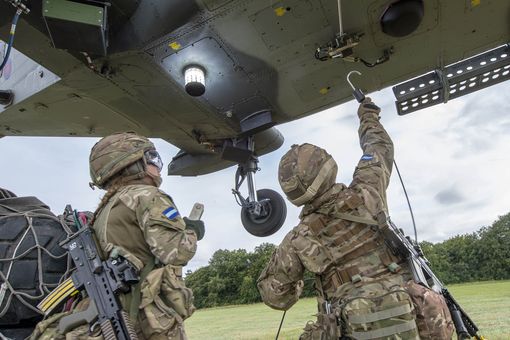
Get the Army’s fleet of battlefield helicopters in the air - from re-arming the Apache gunship to programming the Wildcat flight maps
Take responsibility for all the equipment and supplies required
Deploy on exercise and operations all over the world, wherever your squadron is needed
Step 1
Your initial military training teaches you how to be a soldier, covering everything from fieldcraft to how to handle a rifle.
If you join as a Junior Soldier (under 17 years and 6 months), you’ll do the basic military training (short) course at Harrogate.
If you join as a Regular Soldier (over 17 years and 6 months), you’ll do the regular adult basic training.
Step 2
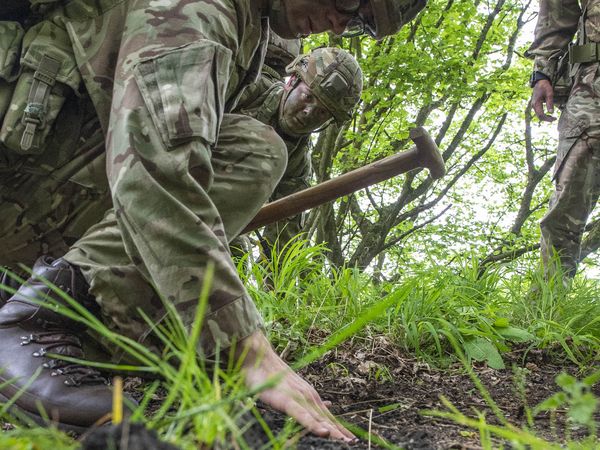
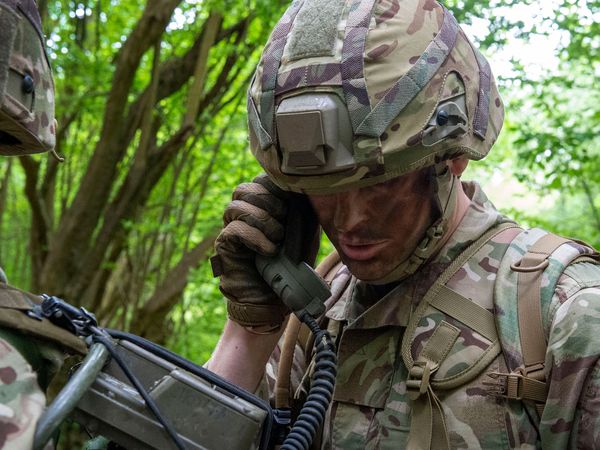
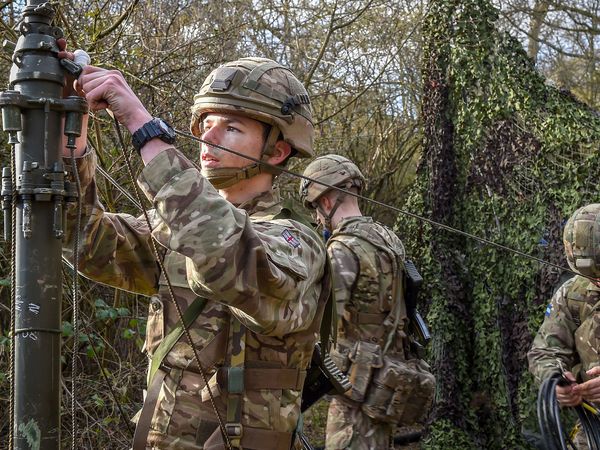
You then have basic Groundcrew and Communication training. After this, you can decide if you want to be a Groundcrew Specialist or a Communication Specialist. You learn about ground-to-air and ground-to-ground communication networks. You're also taught to use our Mission Planning System and help pilots plan real-life missions. You'll work in a fast-paced operations room and develop IT and radio skills. You will also get Cat B (car) and Cat C+E (LGV) driving licences.
You'll earn £27,282 a year from the start of your training, which will go up as you progress throughout your career.
Cat B Driving Licence
Functional Skills in English & Maths
Level 3 Radio Network Technician Apprenticeship
Coaching & Mentoring
Degree level 4 and 5 Certificates and Diplomas in Management and Leadership
Level 3, 4 and 5 Award, Certificate and Diplomas in Education and Training
Your application journey
From application to training, you can expect a timeline of around 3-6 months.

Timelines can vary based on individual circumstances.
Online application
Complete your application form online. You'll need details about your education, work history, and why you want to join the Army.
Individual Careers Discussion
Meet with an Army Recruiter who will discuss your application, answer questions, and guide you through the next steps.
Medical Checks
Next you'll have your medical records checked. This could take some time as it's a really important step to make sure it's safe for you to join.
Assessment centre
Attend a 2-day residential assessment where you'll complete fitness tests, cognitive assessments, medical examinations, and team exercises.
Security clearance
Background and security checks are conducted. This can take longer depending on your personal circumstances and history.
Real Army Life
Find out more about life as a Aviation Communications Specialist
Ask a Soldier
Get honest answers from real soldiers in the roles you’re interested in. Read previously asked questions or ask your own.
Groundcrew specialists are responsible for but not limited to: Ground handling of aircraft, re fuelling aircraft, re arming of aircraft weapon systems, performing external checklists to assist pilots on aircraft starts ground runs shutdowns and air tests, tactical forward arming points, rigging underslung loads, landing point commanders, underslung load operations, drivers, vehicle servicing.
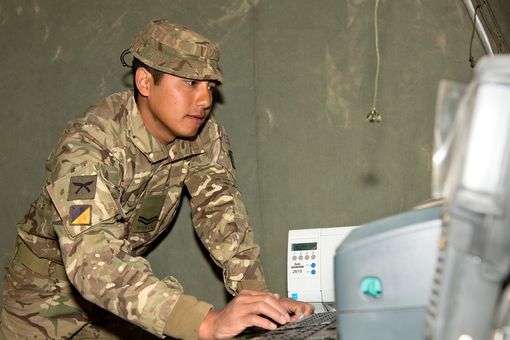
Aviation communications specialists are responsible for but not limited to: communications with aircraft, setting up forward tactical communication points, aircraft mission planning, maintaining communication equipment, vehicle servicing.
Connor
Army Air Corps
The AAC is one of the few roles in the Army where you get to do the job you trained for on a daily basis. For example, our pilots have to remain in current flying practice, so our aircraft are constantly flying and are supported by all officers and soldiers in associated jobs.
The AAC also offers very junior soldiers the opportunity to command at a very early stage in their careers. Senior Airtroopers (our name for Private soldiers) and Lance Corporals can command Apache Attack Helicopter refuelling and re-arming teams and Helicopter Landing Sights as well as commanding communications detachments which may be operating forward of the main base area.
We are also a relatively small Corps so we are a very tight-knit community and everyone tends to know each other regardless of where you are stationed.
Life in the Army Air Corps is focused on aviation, so you’re working around aircraft and operations every day. It’s a close-knit Corps where everyone plays a part in keeping aircraft flying and missions moving.
David
Army Air Corps officer
Anybody who has a good general level of fitness will be absolutely fine. Basic training is about taking you from being fit to being Army fit.
You don’t need to arrive as a finished athlete. If you’re reasonably active and willing to put the effort in, you’ll improve quickly with training and support.
Greg H
Royal Military Police
Phase 1 training will gradually push your limits, both physically and mentally, and you learn a lot about what you’re capable of.
Basic training is where you learn the fundamentals of Army life, from fitness and discipline to teamwork and core soldiering skills. It’s challenging, but you’re supported every step of the way as you build confidence and resilience.
Tori C
Royal Army Medical Services
Most days you finish work and can spend your evenings however you like, and you’re usually free to go away at weekends.
When you’re not on duty, your time is your own. Many people use evenings and weekends to relax, keep active, or spend time with friends on camp.
James M
Infantry
The Army has worked hard to improve its food options, with several choices available each day including hot meals and healthier options.
You’ll eat in the cookhouse, where meals are prepared for you each day. There’s a good choice, and it’s designed to keep you fuelled for training.
Rob H
Royal Armoured Corps
Your future starts here
Every Aviation Communication Specialist started exactly where you are now. Take the first step.
Not ready to apply? Get in touch

Contact us


Find a careers centre

More roles like this
Aviation Groundcrew Specialist
 Featured
Driver Communications Specialist
 Featured