- .Regular Army
- .Find a Role
- .Royal Signals Officer

- intelligence
- Officer
- Regular
Royal Signals Officer
Royal Signals Officer: Lead. Innovate. Excel. Are you ready to take on a pivotal role within the Army, where leadership, responsibility, and cutting-edge technical opportunities converge?
Royal Signals
Starting salary
£35,925 - £42,948
Age range
18 - 29
Qualifications needed
GCSE and UCAS points
Role details
Everything you need to know about the role, requirements and what you’ll gain.
Age
You can join between the ages of 18 – 29. At the time of your application you will need to be between 17 years & 9 months old and 28 years & 11 months old.
Fitness
Mid Thigh Pull 76kg
Medicine Ball Throw 3.1m
MSFT (beep test) level 7.10
Education
72 UCAS points and 35 ALIS points at GCSE (including at least grade C/4 in English, Maths and a science / foreign language).
Need help?
Unsure about any requirements? Our recruitment team is here to help.

Royal Signals
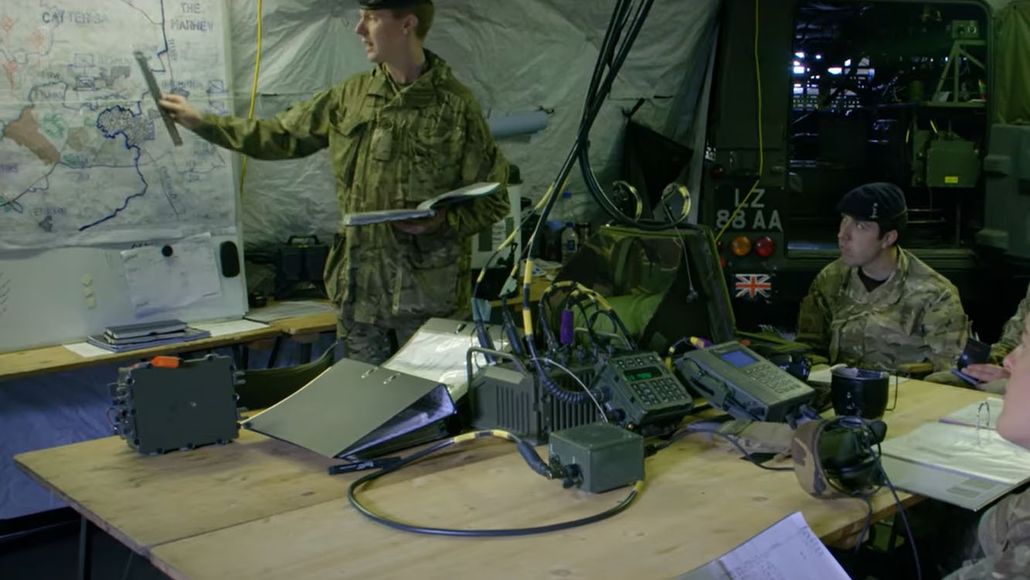
Royal Signals soldiers and officers provide the Army’s communications. They use radios, networks and information systems to keep units connected, helping information move quickly.
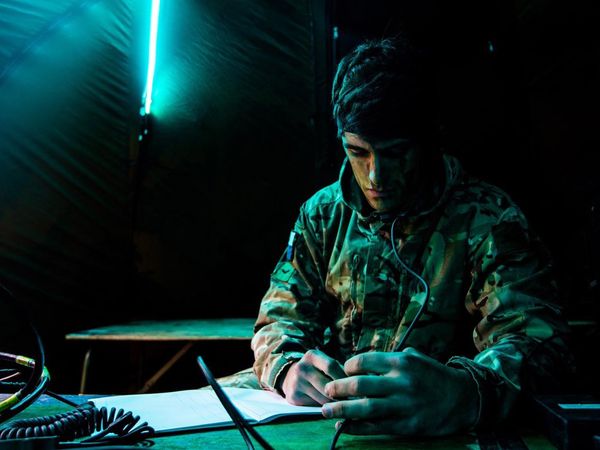
As a Royal Signals Officer, you will lead and motivate specialist soldiers responsible for the Army's communication systems, ensuring seamless and secure connectivity across diverse operational environments, providing Decision Advantage for commanders at all levels.
Your Role:
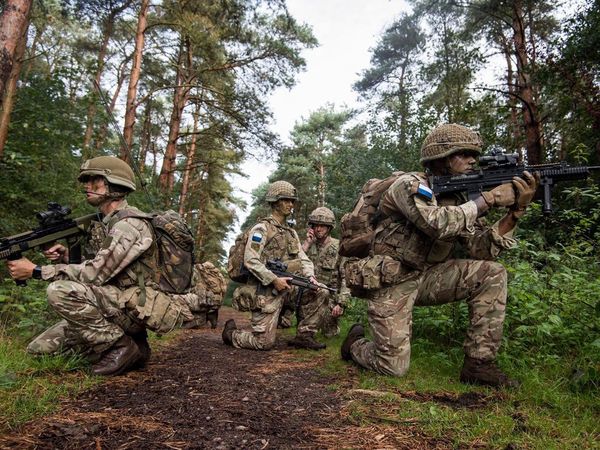
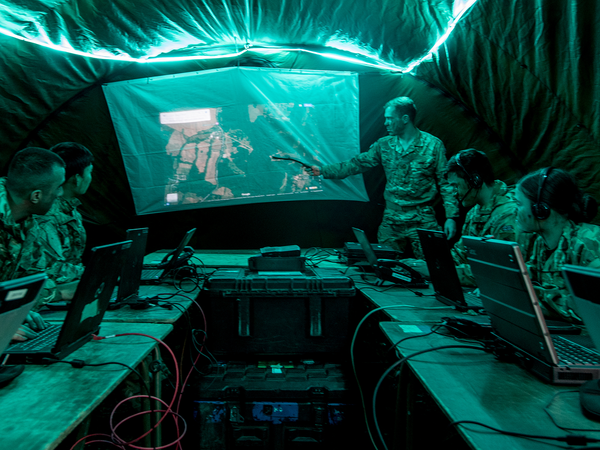
Leadership Excellence: Direct the construction of headquarters during operations, design and establish robust communications networks across the battlefield, and lead highly qualified soldiers in the field, in barracks, and on Adventurous Training.
Technical Mastery: Engage in Electronic Warfare, protect friendly networks, and command armoured vehicles whilst deployed on operations. The Royal Signals are at the forefront of IT, Cyber Defence, and Telecommunications, providing the vital link to every part of the Army.
Innovative Engineering: Become an expert in engineering and operating advanced systems, networks, and communications equipment, ensuring our forces maintain a technological edge.
Why Join Us?
Dynamic Environment: Fast-paced and game-changing, the Royal Signals offer a unique blend of leadership and technical challenges that will keep you engaged and growing.
Elite Team: Work with some of the most qualified and skilled soldiers in the Army, driving innovation and excellence in every mission.
Professional Growth: Continuous opportunities for personal and professional development in a field that combines tactical operations with advanced technological applications.
Join the Royal Signals as an Officer and lead the charge in IT, Cyber Defence, and Telecommunications. Your expertise will provide the battle-winning communications that keep our forces connected and secure. Lead, innovate, and excel with the Royal Signals.

Key responsibilities
Work independently and think on your feet
Enjoy unrivalled travel opportunities
Access continued professional development throughout your entire career, including chartered status
Command either small specialist teams or large troops of up to 45 people straight out of training
Provide communications for British Army formations and work with other nations and governmental organisations
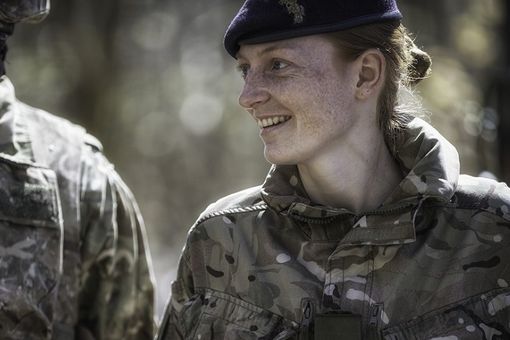
"THE DIVERSITY OF ROLES AND THE OPPORTUNITY TO LEAD INTELLIGENT AND MOTIVATED SOLDIERS HAS MADE MY CAREER AS A SIGNALS OFFICER REWARDING AND ENJOYABLE. IT'S EXACTLY WHY I JOINED UP."
Step 1
You’ll start your career on the 44-week Commissioning Course at the Royal Military Academy Sandhurst. This is for all officer cadets, regardless of the Corps that they’re hoping to join.
Step 2
Following a short attachment you will attend the Royal Signals Troop Commanders' Course. This five-month course prepares you to take up your first appointment as a Royal Signals Troop Commander. You will learn the fundamentals of satellite communication, radio propagation and computer network theory. This will enable you to command our technical soldiers, the experts on each particular system.
You'll earn £35,925 during your year of training at the Royal Military Academy, Sandhurst, before commissioning and becoming a Second Lieutenant, on £42,948 a year.
Find out more about pay and benefits.
Troop Commanders' Course equates to 2/3 of BSc Communication Management (further distance learning required)
MSc / MEng opportunities, Chartered Practitioner in IT, Funded membership of professional bodies (IET/BCS)
Other management qualifications such as AGILE and ITILv4
Access to wider network of Cyber Operational Planning qualifications
Access to fully funded full time in service degrees in Computer Science and other STEM related subjects


Your application journey
From application to training, you can expect a timeline of at least 6 months.
Timelines can vary based on individual circumstances.
Online application
Complete your application form online. You'll need details about your education, work history, and why you want to join the Army. You'll then be sent some medical forms to complete, so that we can understand your medical history.
Interview
You'll be invited to an online interview with your local recruiter. This will give us a chance to get to know you, and see whether you'd be a good fit for the Army. You'll also get to find out more about how to get ready for the next stage. Before you head to officer selection, you will be invited to Westbury for a face to face medical examination.
Army Officer Selection Board (AOSB) briefing
Once your recruiter thinks that you're ready, and you've passed a face to face medical you'll be sent to briefing. Over 2 days you'll be assessed on physical and practical exercises and learn how to prepare for Main Board.
AOSB Main Board
Time to put your skills to the test. This 4 day event will test you mentally and physically. Main Board can be attended no less than 4 weeks after going to Briefing but you may be advised to delay depending on the 'category; '1-4', that you are awarded.
Security clearance
Background and security checks are conducted. This can take longer depending on your personal circumstances and history.
Real Army Life
Ask a Soldier
Sandhurst itself was mostly about learning how to be a soldier, learning about leadership, military studies and platoon‑level tactics. It was a tough 44 weeks, but ultimately really rewarding and fun.
Officer training at Sandhurst is designed to build you into a confident leader. You’ll develop your decision-making, teamwork and resilience, alongside the skills needed to lead others in challenging situations.
Robert H
Royal Armoured Corps
As an officer we have a duty to look after our soldiers, physically but also mentally. We sometimes have to make difficult decisions, even when they’re not easy.
You’re given responsibility early on, but it’s introduced gradually. From the start, you’re trusted to look after yourself, your kit and support your team, with clear guidance and support in place. As you grow in confidence and skills, that responsibility increases. You’re never left to manage things alone. You’re shown what to do, why it matters, and how it fits into the bigger picture.
Jen C
Adjutant General's Corps
You undergo the same world‑class and rigorous training as every other Army Officer – focusing on leadership, military skills, confidence, problem solving and academic study.
Officer training focuses more on leadership, planning and decision-making. You’ll still be challenged physically, but you’ll spend more time learning how to lead others and take responsibility.
Zoe L
Adjutant General's Corps
During training you live with others on your course, and when you join your unit you’ll normally have your own room in the mess.
During officer training, you’ll live on site in shared accommodation. It’s designed to help you focus, build routines and get to know the people you’ll train alongside.
Sam J
Royal Artillery
Anybody who has a good general level of fitness will be absolutely fine. Basic training is about taking you from being fit to being Army fit.
You don’t need to arrive as a finished athlete. If you’re reasonably active and willing to put the effort in, you’ll improve quickly with training and support.
Greg H
Royal Military Police
Your future starts here
Every Royal Signals Officer started exactly where you are now. Take the first step.
Not ready to apply? Get in touch
Contact us
Find a careers centre
More roles like this
Engineering Officer
Intelligence Officer
HR Officer
Part-time opportunity
This role is also available in the Army Reserve
Serve part-time as a Reserve Royal Signals Officer while maintaining your civilian career. Train on evenings and weekends, with opportunities for overseas deployments and adventure training.
Commitment
27 days per year minimum
Training
Evenings and weekends
Benefits of Reserve service
- Earn extra income
- Gain world-class training
- Develop skills
- Close-knit local unit
- Deployment opportunities


/)